
What to Do When You Find a Dead Animal in or Around Your Property
- Licensed & Insured
- Same-day service
- Melbourne Local experts
- Residential & Commercial
- 5-Star rated service
Finding a dead animal inside a home, roof, wall cavity, garden or commercial building can be unpleasant and difficult to manage. In many cases, the animal is not immediately visible. Property owners first become aware of the problem because of a strong smell, flies, unusual staining or pest activity around one particular area. Rats, mice, possums, birds and other animals may enter buildings looking for food, warmth or shelter. If an animal becomes trapped, injured or dies inside an inaccessible part of the property, locating it can become challenging. The problem should not simply be covered with air fresheners or ignored. The source needs to be located where reasonably possible, removed safely and the affected area assessed for contamination. For Melbourne homeowners, property managers and businesses, understanding the warning signs and knowing what action to take can help prevent an unpleasant situation from becoming a larger hygiene problem.
Dead Animal Removal
Why Animals Enter Melbourne Properties
Animals enter buildings for many different reasons. During Melbourne’s colder months, rodents and other pests may search for warm, protected areas. Roof cavities, wall spaces, garages, sheds and subfloors can provide suitable shelter. Properties may also attract animals when they provide easy access to:
- Food scraps
- Pet food
- Rubbish bins
- Roof cavities
- Broken vents
- Gaps beneath doors
- Damaged roofing
- Open wall penetrations
- Water sources
- Overhanging trees and vegetation
Rodents can enter through surprisingly small openings, while possums and birds may gain access through damaged roofing, eaves or larger structural gaps. Once inside, animals may become trapped or unable to find their way back out.
Table of Contents
Where Are Animals Commonly Found?
The location depends on how the animal entered the property and the species involved.
Roof Cavities
Roof spaces provide warmth, protection and darkness. Rats, mice, possums and occasionally birds may enter through damaged roofing, gaps around eaves or openings close to gutters. If an animal dies in the roof, odours can move through ceiling vents and other openings into living areas.
Wall Cavities
Rodents can travel through narrow wall spaces using openings around pipes, wiring and structural gaps. Finding the exact location inside a wall can be difficult because odours may travel beyond the immediate source.
Under Houses
Properties with accessible subfloor areas may experience problems beneath the building. Animals can enter through damaged vents, crawl-space openings or gaps around foundations.
Garages and Sheds
Garages, storage areas and sheds can provide quiet shelter. Check behind stored equipment, boxes, shelving and other areas that are rarely disturbed.
Gardens and Outdoor Areas
Animals may also be found beneath decks, around fences, near garden beds or behind outdoor equipment. Outdoor carcasses can still attract insects and create odour problems, particularly when they are close to windows or entrances.
Related Services
- Bird control
- Rodent control
- Cockroach control
- Ant Control
- Spider control
- Possum Removal
- Wasp Nest Removal
Need Professional IndianMyna Control ?
- +61 409 343 184
- Aptive Cleaning Services
- Melbourne Wide
Why the Smell Can Become So Strong
After an animal dies, natural decomposition begins.
The strength and duration of the smell can vary depending on several factors, including:
- Size of the animal
- Location
- Temperature
- Humidity
- Ventilation
- Accessibility
- Stage of decomposition
During warmer Melbourne weather, odours may develop quickly. A small rodent inside a wall can sometimes create a surprisingly noticeable smell because the air within wall and ceiling cavities can carry odours into other parts of the property. Simply using air fresheners rarely solves the underlying problem.
Common Signs There May Be an Animal Carcass Nearby
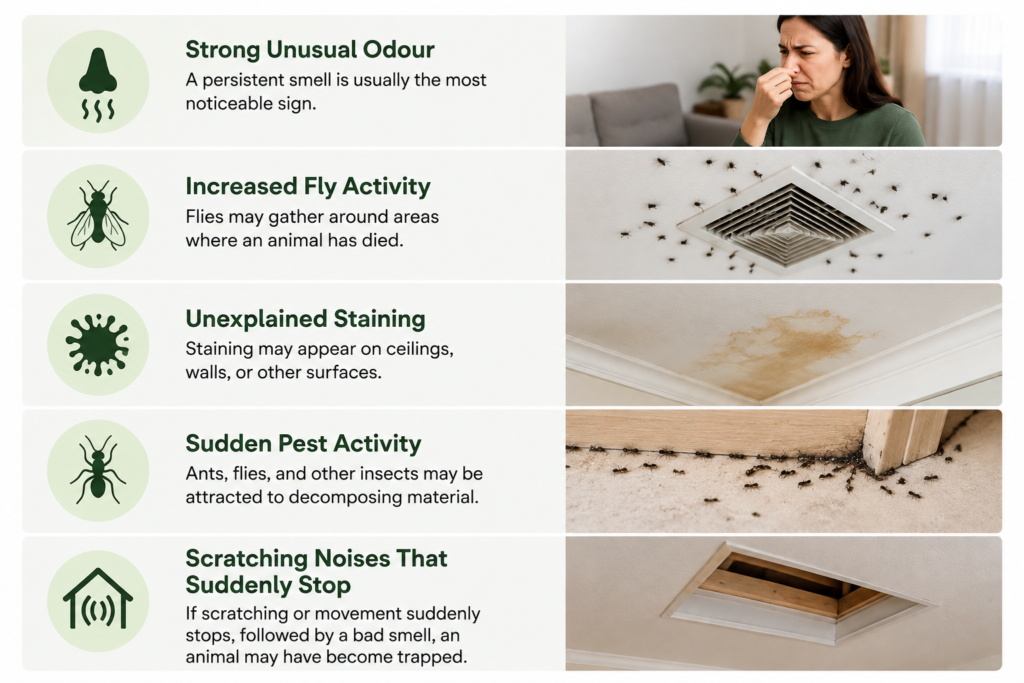
Why Odour Treatment Alone Is Not Enough
It can be tempting to use strong fragrances, sprays or household deodorisers to cover the smell. These products may make the odour less noticeable temporarily, but they do not remove the underlying source. If the carcass remains accessible, locating and removing it is generally the priority. After removal, ventilation, cleaning and appropriate deodorizing can help manage remaining odours. Depending on the location and extent of contamination, some smell may take time to disappear completely.
What Happens During Professional Removal?
Professional assistance usually begins with an assessment rather than immediately opening walls or ceilings. The aim is to identify the most likely location and determine the safest practical way to access the affected area.
1. Property Assessment
The technician may ask where the smell is strongest, when it began and whether pest activity was noticed beforehand. The property can then be inspected for signs of animal activity.
2. Locating the Source
Possible roof spaces, wall areas, subfloors or external locations are investigated.
The technician may also check nearby entry points for signs such as droppings, nesting material or damaged building sections.
3. Safe Removal
When the animal can be accessed safely, it can be removed using appropriate handling methods. The exact approach depends on the location and condition of the affected area.
4. Cleaning the Immediate Area
Accessible contamination around the location may need to be cleaned after removal. This is particularly important where fluids, droppings or nesting material are present.
5. Odour Treatment
Odour treatment may be recommended after the source has been removed. Removing the source is the most important step. Deodorisers can then be used as part of the clean-up process rather than simply masking the smell.
6. Entry-Point Assessment
Where possible, the technician may identify how the animal entered. This information can help property owners take preventative action.
Assistance for Melbourne Homes and Businesses
At Aptive Pest Control, we help Melbourne homeowners, tenants, property managers and businesses investigate unwanted animal odours and carcasses around buildings. Our technicians can inspect accessible roof cavities, subfloors, walls and surrounding areas to help identify the likely source. Where the animal can be safely accessed, it can be removed, and appropriate cleaning and deodorising options can be discussed. We can also inspect for signs of rodents or other pests that may explain how the problem developed.If you have noticed an unexplained smell, increased fly activity, or signs that an animal may have died somewhere on your property, arranging an inspection can help identify the cause.
Call Aptive Pest Control on +61 409 343 184 to arrange an inspection or request a quote.