
Why Indian Mynas Are a Problem Around Melbourne Homes
- Licensed& Insured
- Same-day service
- Melbourne local experts
- Residential & Commercial
- 5-Star rated services
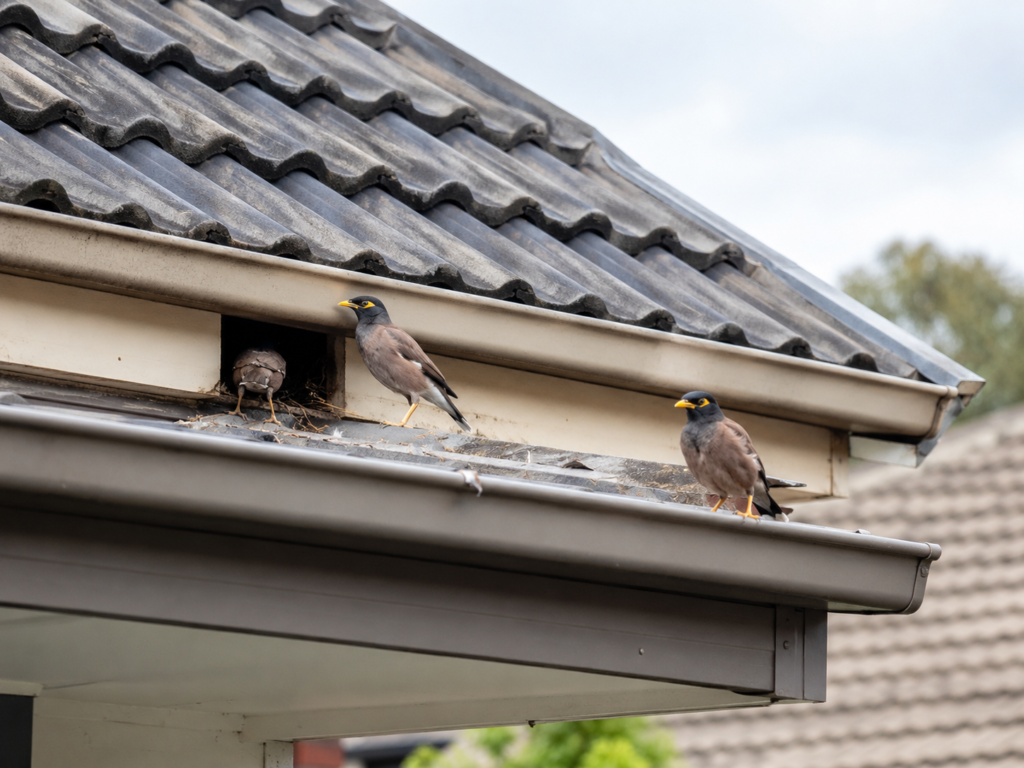
Indian mynas have become a familiar sight around many Melbourne suburbs. You may notice them sitting on rooflines, gathering around shopping areas, entering roof cavities or repeatedly disappearing beneath solar panels. For property owners, repeated Indian myna activity can become more than an everyday bird nuisance. Once the birds find a protected nesting area with easy access to food and water, they may continue returning to the same property. Indian mynas are highly adaptable birds that are well suited to urban environments. Residential developments, commercial buildings, schools, warehouses, parks and shopping precincts can all provide the shelter and resources they need. At Aptive Pest Control Melbourne, we provide professional Indian myna pest removal and bird-control solutions across Melbourne for homes, commercial properties and strata sites. Understanding why Indian mynas are choosing your property is one of the most important steps towards managing the problem effectively
IndianMyna Bird Control
Why Are Indian Myna Birds Common Around Melbourne?
Indian mynas are particularly successful in urban and suburban environments because they have adapted to living around people. Unlike birds that depend heavily on natural bushland habitats, Indian mynas can find food and shelter in heavily developed areas. Residential gardens, outdoor dining areas, rubbish bins, shopping centres, school grounds, car parks and commercial precincts can provide regular food sources. Buildings also offer numerous protected places where the birds can roost or nest.
Common locations include:
- Roof cavities
- Wall voids
- Eaves
- Gutters
- Ventilation openings
- Sheds
- Warehouses
- Commercial signage
- Balconies
- Spaces underneath solar panels
As Melbourne continues to grow and urban areas provide more artificial structures, suitable nesting opportunities can remain readily available. Indian mynas are also persistent once they discover a location that provides reliable shelter. This is why simply chasing the birds away may not solve the underlying problem.
Table of Contents
Related Services
- Bird Control Melbourne
- Pigeon Control Melbourne
- IndianMyna Control
- Starling Bird Control
- Bird Netting Melbourne
- Dead Animal Melbourne
Why Solar Panels Can Attract Indian Myna Birds
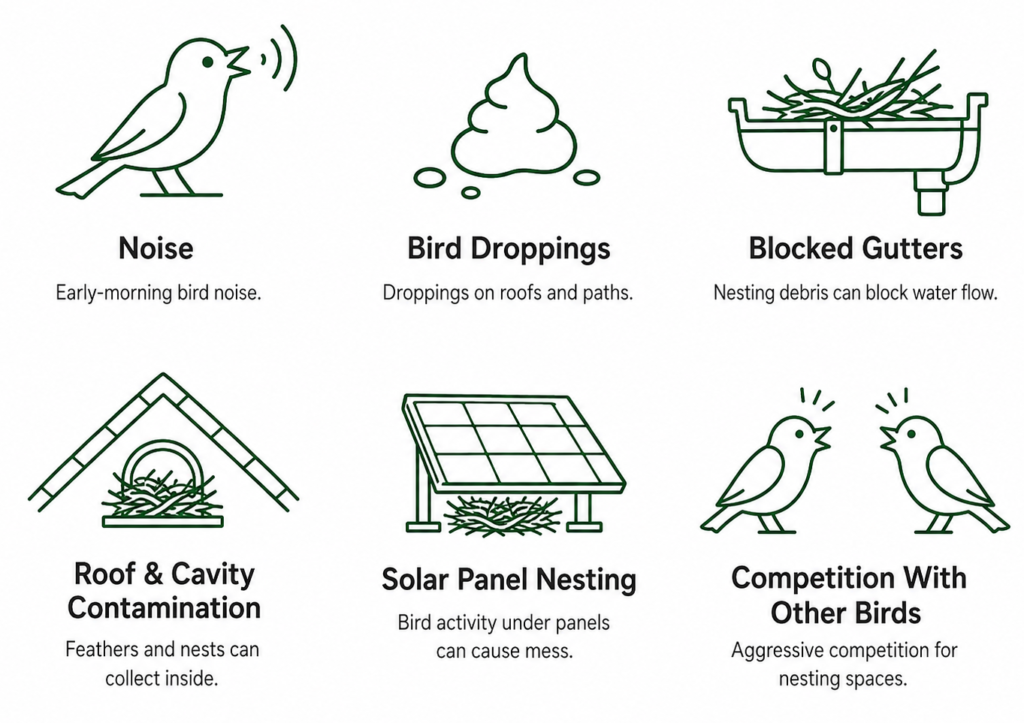
Solar panels can create an attractive sheltered area for birds. The gap between the roof and the panels may provide shade, protection and a relatively hidden place for nesting. Because the activity takes place above eye level, homeowners may not immediately realise that birds are spending significant amounts of time underneath their solar system.
Possible signs include:
- Indian mynas repeatedly landing near the panels
- Feathers collecting along roof edges
- Nesting materials around panel edges
- Bird droppings on the roof
- Early-morning chirping or movement
- Nesting debris entering nearby gutters
If birds are repeatedly entering beneath solar panels, addressing the access area can be more effective than relying solely on scare devices. Professional solar panel bird proofing may involve installing a suitable exclusion barrier around the accessible perimeter while protecting the solar system itself.
Need Professional IndianMyna Control ?
- +61 409 343 184
- Aptive Cleaning Services
- Melbourne Wide

Why Some Melbourne Suburbs Experience More Indian Myna Activity
Indian myna activity can occur across metropolitan Melbourne, but certain environments are particularly attractive. Areas with shopping centres, cafés, schools, parks, industrial estates, transport hubs and busy commercial precincts may provide reliable food and numerous nesting opportunities. Properties throughout areas such as Richmond, Brunswick, Dandenong, Sunshine, Craigieburn, Werribee, Point Cook, Glen Iris and surrounding Melbourne suburbs can experience recurring bird activity. However, the location of the suburb is only part of the picture. The design and condition of the individual property are often more important. For example, a home with accessible roof cavities and solar panels may provide a better nesting location than neighbouring houses without those features. Warehouses and commercial properties can also attract Indian mynas because roof structures, loading areas, signage and sheltered building openings can offer secure places to rest or nest.
How Do You Know If Indian Mynas Are Nesting on Your Property?
An occasional Indian myna visiting your garden does not necessarily mean you have a bird problem. Repeated activity around the same section of your property is more important. Watch for Indian mynas continuously entering and leaving the same gap or roof location. Other common warning signs include:
- Regular early-morning bird noise
- Birds repeatedly sitting on the same roof section
- Nesting materials in gutters
- Feathers around roofs or solar panels
- Droppings near entrances or outdoor areas
- Birds disappearing into wall or roof openings
- Nest debris falling from roof spaces
- Birds aggressively defending a particular location
- Increased activity around sheds or outbuildings
- Blocked gutters close to nesting areas
If you repeatedly see birds entering your roof, wall cavity or solar panel area, arranging an inspection can help identify exactly where they are gaining access.
Why DIY Indian Myna Deterrents Often Fail
It is common for homeowners to try inexpensive bird deterrents before arranging professional assistance. Typical products include:
- Fake owls
- Reflective tape
- Hanging objects
- Ultrasonic devices
- Plastic predators
- Basic bird spikes
- Noise deterrents
Some of these products may temporarily affect bird behaviour. The difficulty is that Indian mynas can become accustomed to objects that remain in the same place and do not represent an actual threat. If the property still provides a safe roof cavity or nesting location, the birds may simply wait, move temporarily or access the area from another direction. Removing a nest without addressing the entry point can create the same problem. The birds may rebuild or use another nearby opening. For longer-term control, it is generally more effective to determine why the birds are using the property and how they are gaining access.
Indian Myna Control Methods
Protect Your Property From Recurring Indian Myna Problems
Indian mynas are highly adaptable birds, and once they find a reliable nesting location, they can be difficult to discourage using temporary deterrents alone. Repeated roof activity, early-morning noise, nesting material, droppings and birds entering cavities are all signs worth investigating. Early action can help prevent the problem from becoming more established. If Indian mynas are nesting around your roof, inside building cavities or beneath solar panels, Aptive Pest Control Melbourne can inspect the property, locate likely access points and recommend practical bird-proofing and prevention options. Contact Aptive Pest Control to arrange an Indian myna inspection in Melbourne and receive a customised solution for your residential or commercial property
